Hey! It's me Anova,

Building high-performance software, with AI as part of the craft.

Software Engineer with 5+ years of building web applications. I work from PRD to production with a clear, documented flow, and use AI to move faster without losing ownership of the fundamentals.

Engineering    ✦    AI Workflows    ✦    Product    ✦    Performance    ✦    Engineering    ✦    AI Workflows    ✦    Product    ✦    Performance    ✦    Engineering    ✦    AI Workflows    ✦    Product    ✦    Performance    ✦    Engineering    ✦    AI Workflows    ✦    Product    ✦    Performance    ✦    Engineering    ✦    AI Workflows    ✦    Product    ✦    Performance    ✦    Engineering    ✦    AI Workflows    ✦    Product    ✦    Performance    ✦    

✦ ABOUT ME

Hi, I'm Anova, a Software Engineer from Indonesia with 5+ years of building web applications. Every piece of work starts the same way: a PRD to agree on the problem, technical docs to agree on the solution, then phases and tasks that are clear enough to execute without guesswork. AI helps me draft, refactor, and test along the way, but the direction, the fundamentals, and every line that ships stay mine. Shipping products across very different industries has taught me to ask better questions before writing code, and to treat clean UI, sound architecture, and performance as defaults.

✦ SPECIALITY

Areas of Expertise

AI-Native Engineering

AI is a tool in my workflow, not the workflow itself. I use it to move faster on things I already know how to build, and I review, test, and own everything that ships.

  • Pairing with AI for drafting, refactoring, tests, and documentation, with every change read and understood before it lands.
  • Strong fundamentals across the stack: TypeScript with React, Next.js, Astro, Svelte, and Vite on the frontend; Node.js, Express, Prisma, Java Spring Boot, Liquibase, and Go on the backend; so I can judge what the tools produce.
  • Automated testing with Playwright, Cypress, and Jest, built together with QA, as the safety net that makes speed sustainable.
  • Docs and specs written first, so AI works from a clear brief instead of guessing intent.

Problem Solving & Delivery

I start from the problem and the people behind it, then design the smallest solution that truly fits and take it all the way to production.

  • Framing the problem first: constraints, users, and what success looks like, before choosing a stack.
  • End-to-end delivery from UI and API integration to CI/CD with GitHub Actions, Jenkins, and ArgoCD, plus monitoring through Google Cloud, Kibana, and Grafana.
  • Performance, accessibility, and maintainability treated as defaults rather than afterthoughts.
  • Interfaces translated faithfully from design into responsive, production-ready code.

Business Understanding

Good software comes from understanding how a business actually works. I invest in domain knowledge so that decisions in code reflect decisions in the business.

  • Learning each domain deeply, from regulated industries to early-stage products, and asking the questions that surface hidden rules.
  • Translating business rules into clear data models and type-safe contracts that teams can trust.
  • Working closely with product, design, and stakeholders in agile teams, from planning to retrospectives.
  • Experience across full-time roles, freelance engagements, and self-initiated products.
AstroAstro
ReactReact
ViteVite
Next.jsNext.js
SvelteSvelte
TypeScriptTypeScript
Tailwind CSSTailwind CSS
React QueryReact Query
ZodZod
Node.jsNode.js
ExpressExpress
PrismaPrisma
JavaJava
Spring BootSpring Boot
LiquibaseLiquibase
GoGo
GraphQLGraphQL
PostgreSQLPostgreSQL
MySQLMySQL
DockerDocker
GitHub ActionsGitHub Actions
JenkinsJenkins
ArgoCDArgoCD
Google CloudGoogle Cloud
AWSAWS
KibanaKibana
GrafanaGrafana
PlaywrightPlaywright
CypressCypress
JestJest
PostmanPostman
GitGit
GitHubGitHub
JiraJira
FigmaFigma

✦ HOW I WORK

Workflow from
PRD to production.

I don't start with code. I start with a shared understanding of the problem, write it down, and let a clear flow carry the work from idea to production. AI speeds up each step; the flow itself is what keeps quality predictable.

Scroll to explore →
01

PRD first

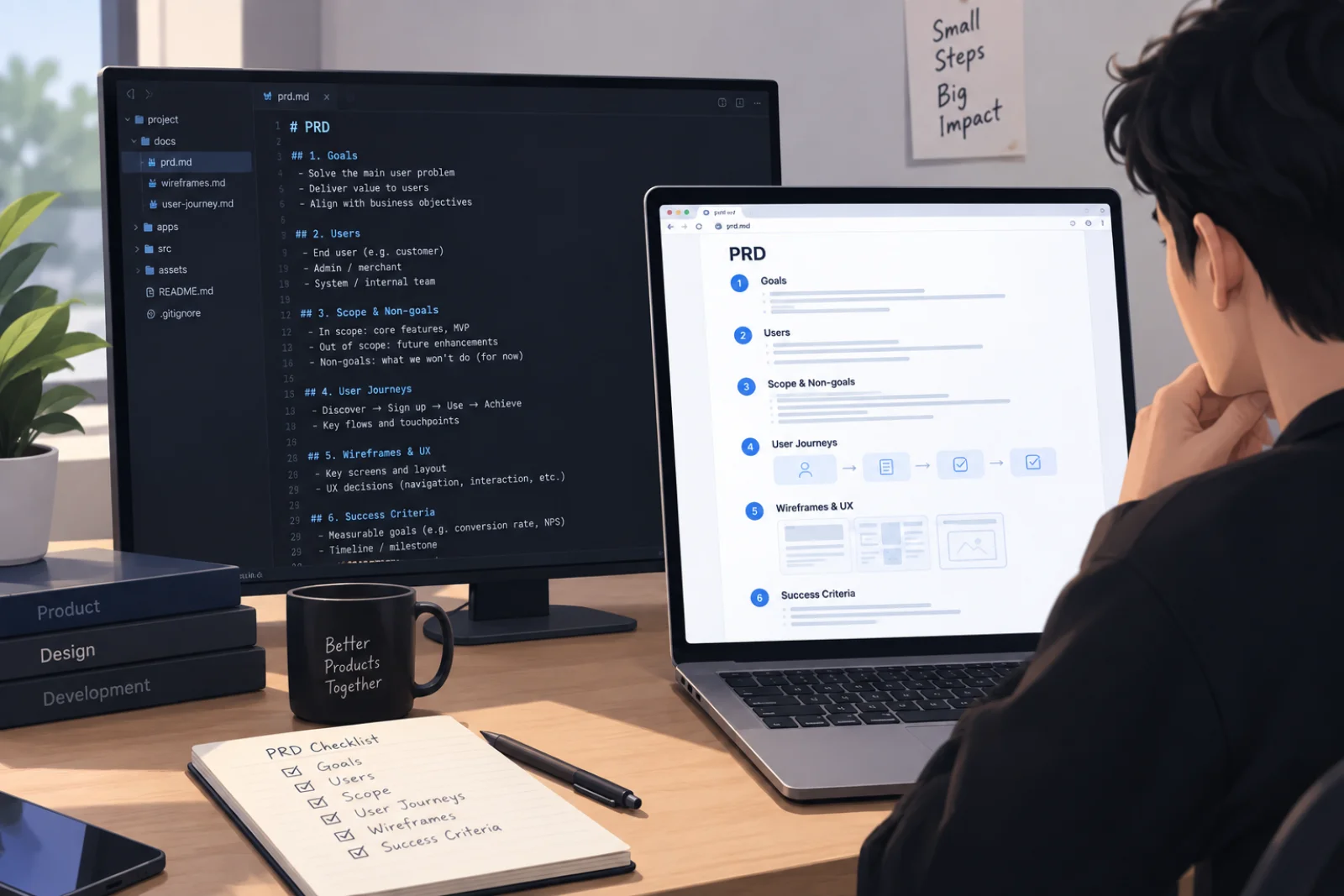
Before any technical decision, I write down the goals, the users, what is in and out of scope, and how success will be measured. This is also where UX is discussed: user journeys and low-fidelity wireframes are agreed with product and design, so the experience is settled before anyone opens a code editor.

02

Tech docs anyone can read

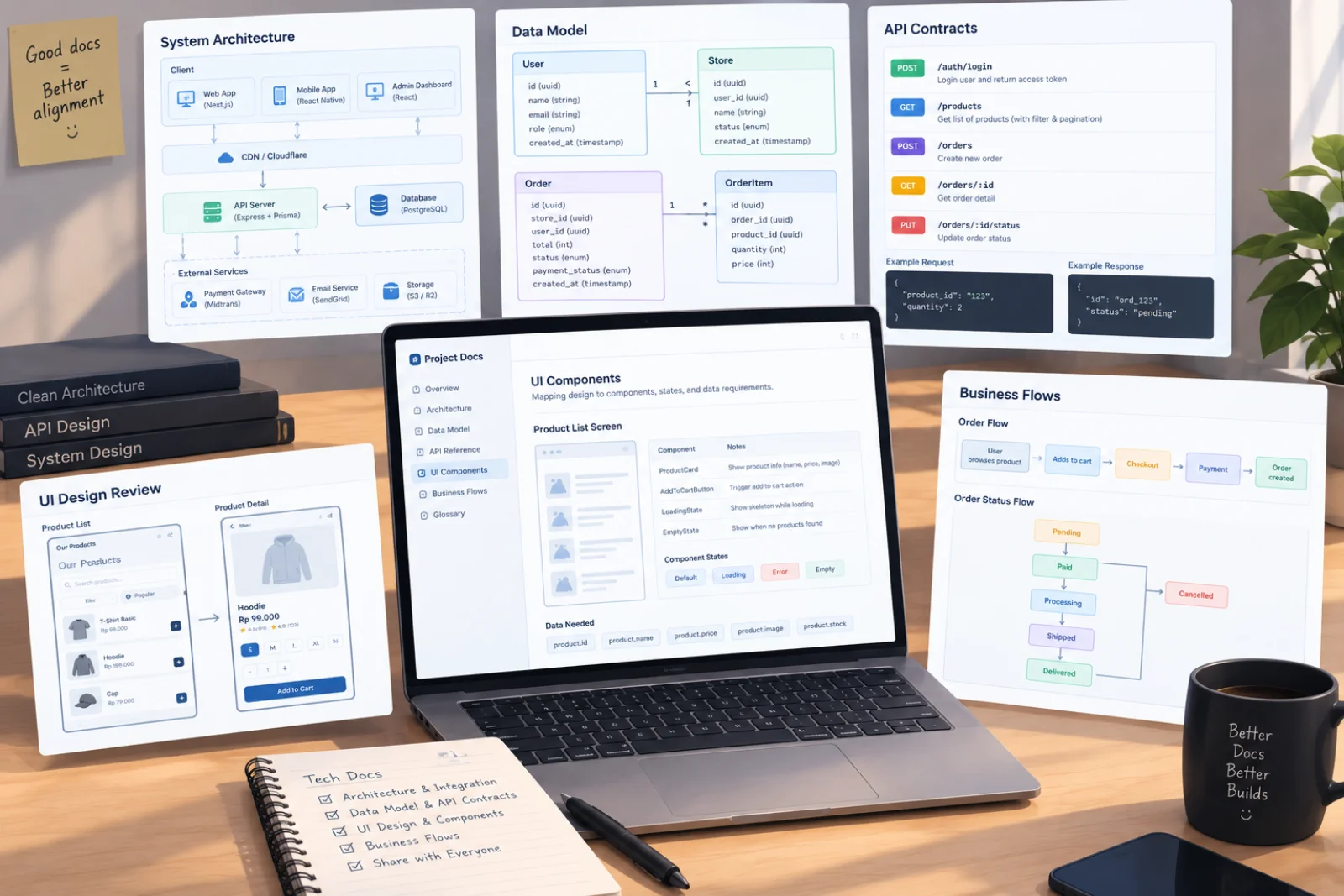
From the PRD and the final UI design, I write technical documentation that a non-technical stakeholder can follow: architecture, data models, and business flows drawn as diagrams, in Markdown or HTML so it doubles as a report. UI designs are reviewed here and mapped to components, states, and the data each screen needs, so the design and the system agree before development starts.

03

Phases and tasks

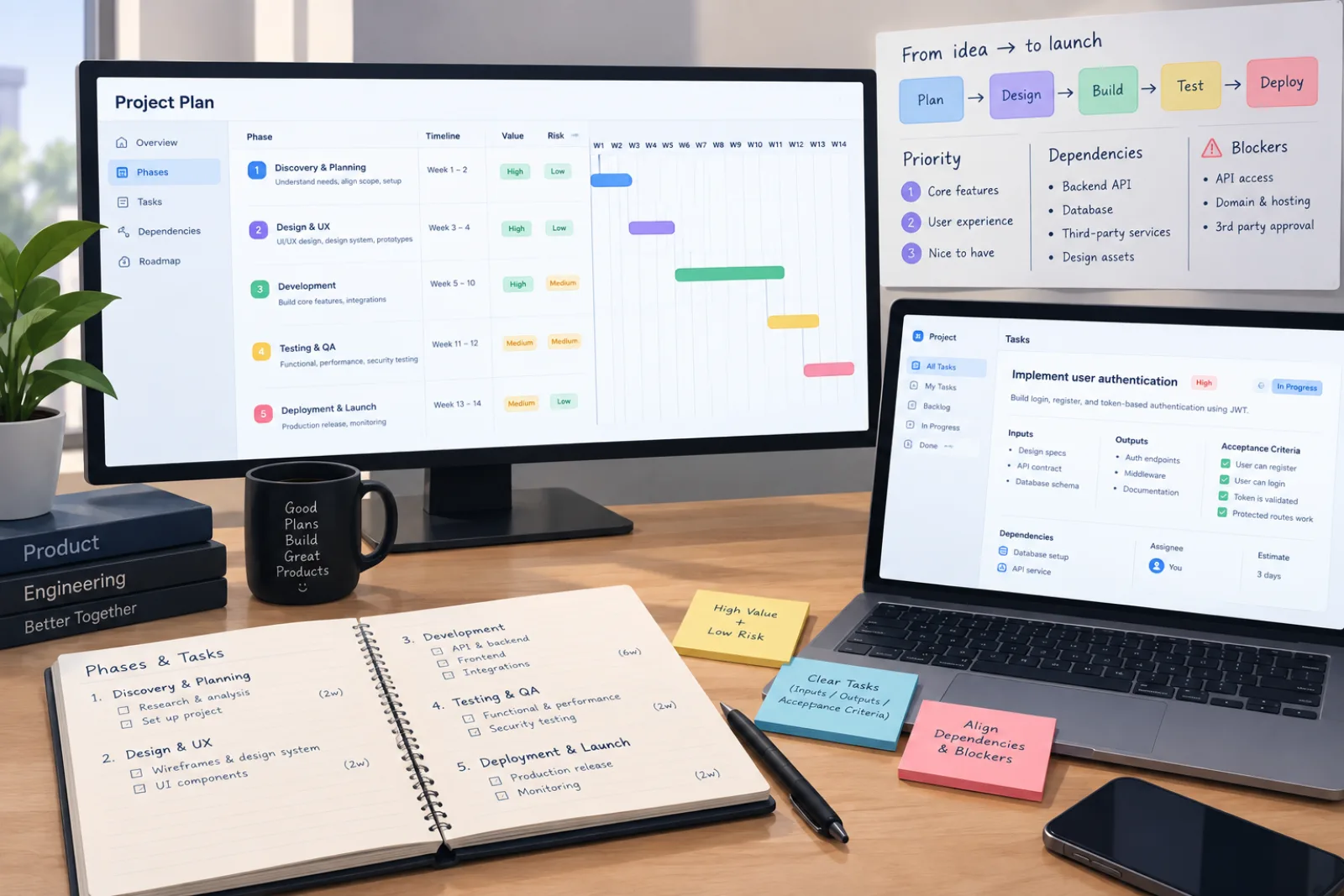
Large work is split into phases that each deliver something usable, then into tasks detailed enough that anyone on the team, or an AI agent, can execute them without guesswork. Priorities and dependencies are aligned before the first line of code.

04

Development

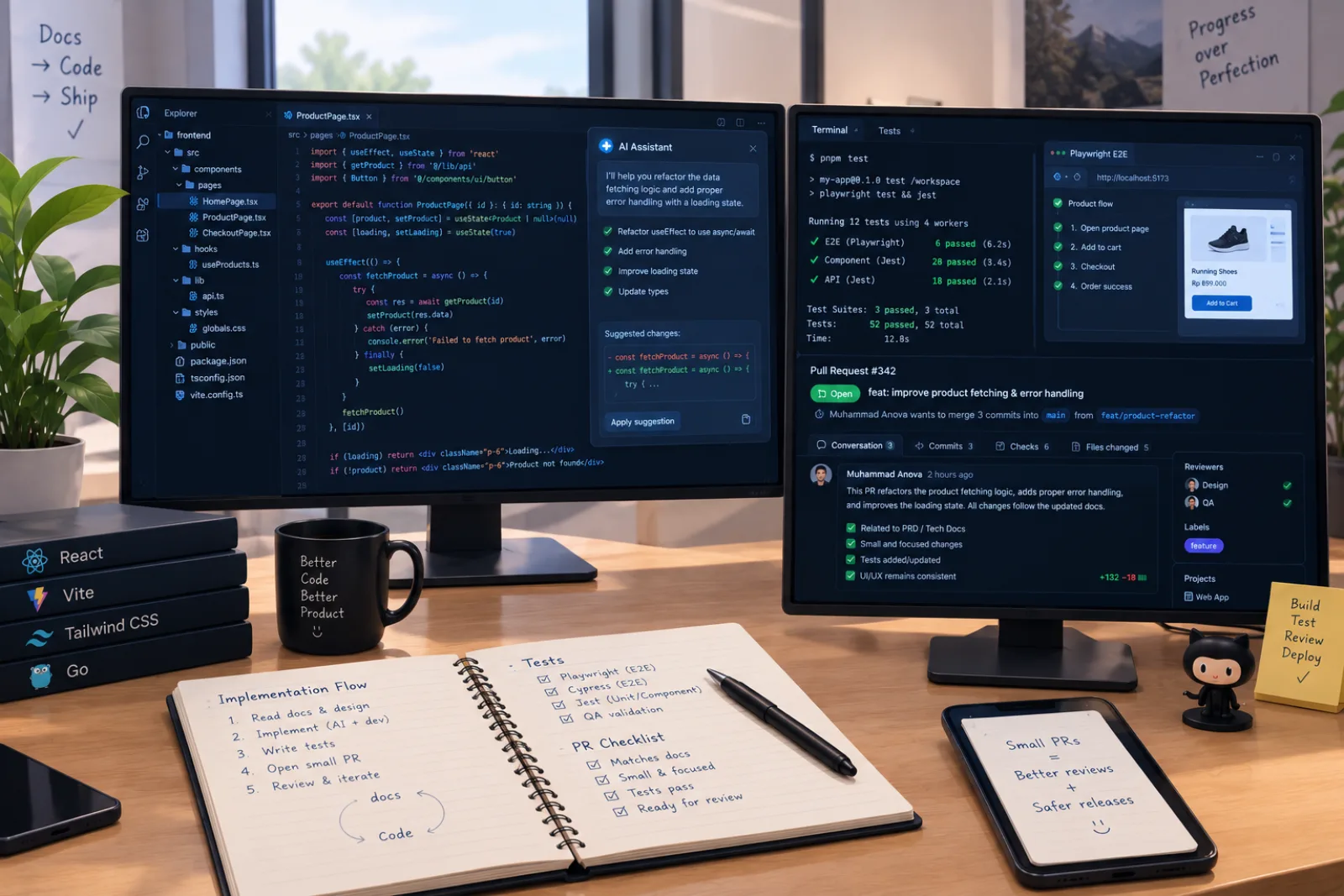
Implementation follows the docs, not the other way around. I pair with AI to draft, refactor, and test, and I review every change against the spec. Small pull requests keep reviews meaningful and rollbacks cheap.

05

Deployment

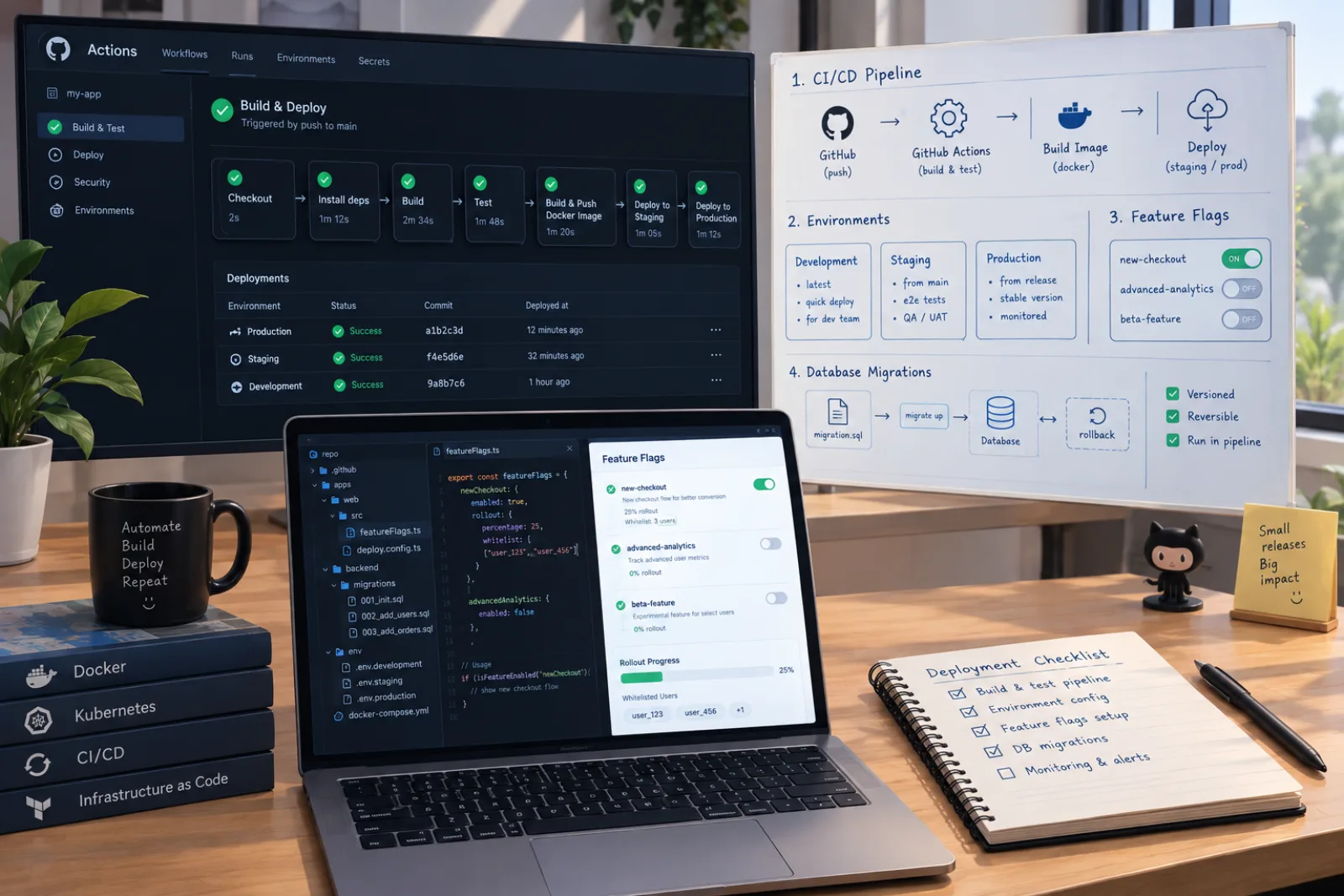
Shipping is automated and repeatable: CI/CD pipelines with GitHub Actions, Jenkins, or ArgoCD, environment-specific configuration, and feature flags so risky changes can be released gradually and switched off without a redeploy.

06

Maintenance

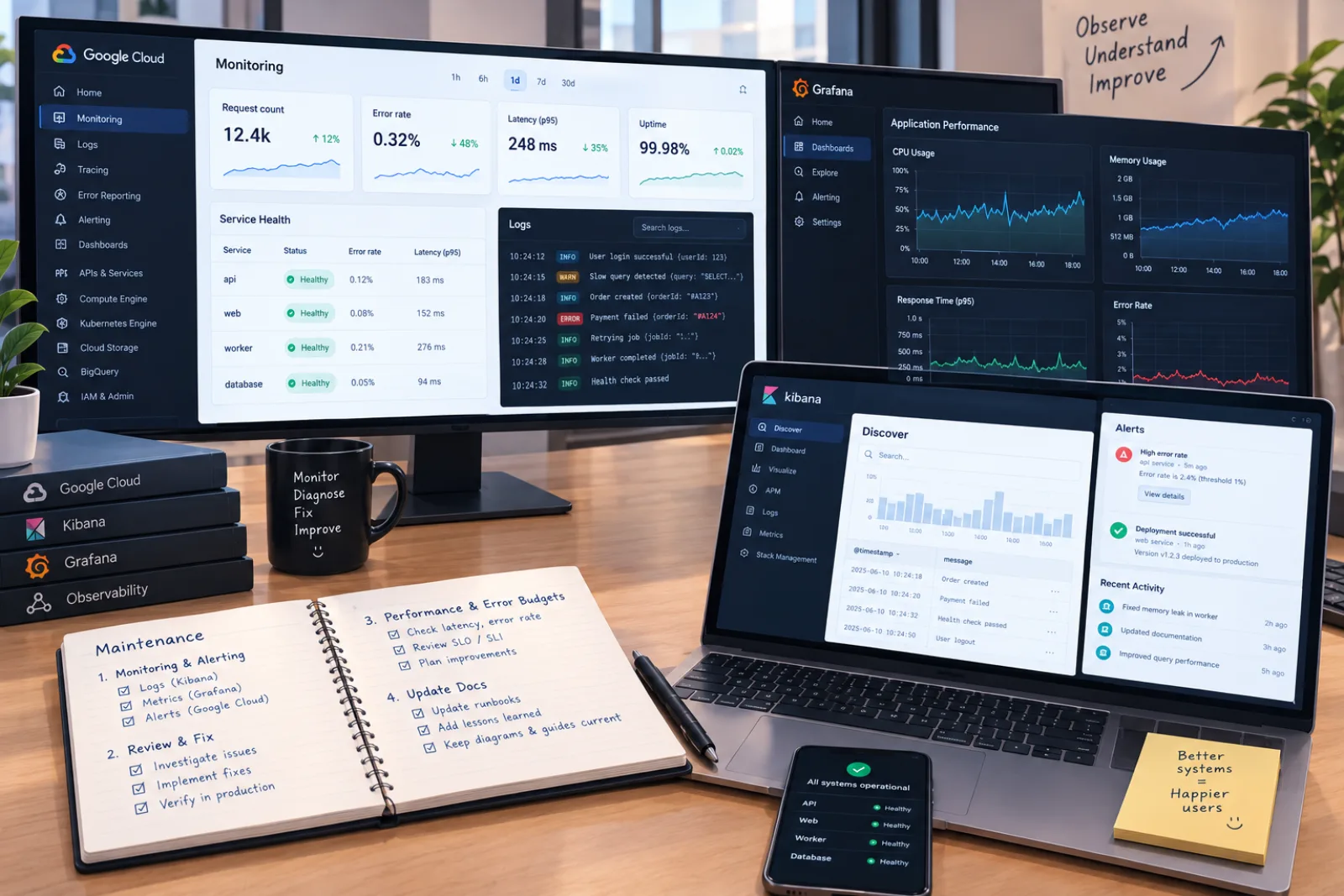
Launch is the start of the feedback loop. I watch logs and metrics through Google Cloud, Kibana, and Grafana, fix what the data reveals, and feed lessons back into the docs so the next phase starts from a better baseline.